

[CSH Workshop] All I learnt in school was to save trees and not use plastic’: Indian children and youth reimagining a political environmental education (T. B. Mortensen )
The Centre de Sciences Humaines is pleased to invite you to the CSH Workshop
by
Therese Boje Mortensen
(Human Rights Studies, jointly affiliated with BML Munjal University (India), Lund University (Sweden) and Antwerp University (Belgium))
on
‘All I learnt in school was to save trees and not use plastic’: Indian children and youth reimagining a political environmental education
On
Thursday, 1 October 2026, from 5:00 pm to 6:30 pm IST
At
Centre de Sciences Humaines
IFI-CSH conference room (ground floor)
2 Dr. APJ Abdul Kalam Road, New Delhi – 110011
Register to attend at CSH Delhi
Register to attend online via Zoom
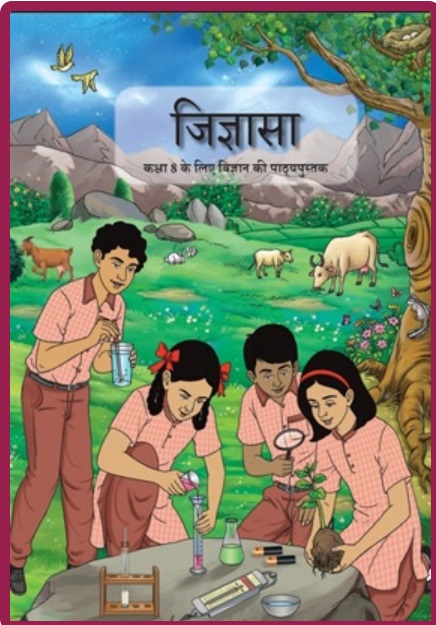
Abstract: The youth-led ‘global’ climate strikes of 2019 were celebrated as inaugurating a new era of youth political agency. Yet, it has become clear that only a minority of young people around the world had the preconditions and privileges to participate in such protests, and much less to remain engaged. The purpose of this paper is to articulate structural barriers for entering and staying in youth climate activism in India. I have followed a group of climate activists in Delhi (through interviews, social media analysis and participant observation) who after their entry into activism in 2019, against the odds, have expanded their political engagement beyond climate change. In parallel, I have followed around 60 school children from Haryana through tuition classes, creative workshops, field visits and curricula analysis. Analysed together, these ethnographic sites offer insights into how children learn about climate change in school, and how politically active young people reimagine environmental school education. The study found that while there was a significant diversity in the interest and knowledge of individual school children, most of them had learnt about global warming from a science- based perspective and easily articulated individualised remedies, such as using less plastic. At the same time, ‘development’ was expressed as an unavoidable future-in-the-making, while ‘environment’ was depicted as an opposite, symbolised by trees and ancestral villages. The young activists in Delhi highlighted how their interest in climate action had not come from the school system, but from experiencing climate change’s effects, from news or social media, or from friends. They reimagined not only environmental education, but environmental education, and they argued that competitive examinations, uncertain career prospects and financial pressure stifled the potential for young people’s political participation. These findings suggest that the potential for youth (climate) activism depends heavily on the structure of the education system.
Speaker:
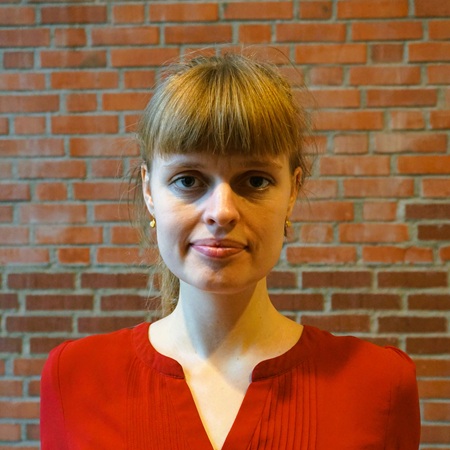 Dr. Therese Boje Mortensen is postdoctoral fellow in Human Rights Studies, jointly affiliated with BML Munjal University (India), Lund University (Sweden) and Antwerp University (Belgium). She holds a BA in South Asian Studies, an MA in Human Rights & Democratisation and a PhD in Human Rights Studies. Her postdoctoral research is about child and youth climate activism in India. Other research interests include children’s political rights, activism, changing civic spaces in India, and ethnographic methods in human rights studies.
For more info contact:
co[dot]lefevre[at]csh-delhi[dot]com
david[dot]singh[at]csh-delhi[dot]com
CSH Workshop is in hybrid mode. Please pre-register for offline and online registration before Thusday, 1 October, 2:00 p.m. IST.
To attend at the venue: Please note the room capacity is limited. Seats will be reserved on a first-come first-served basis. Kindly bring ID proof to be granted access to the venue.


