[CSH-CPR Urban Workshop #197] Planning Karol Bagh: Segregation, Land Value and the Delhi Improvement Trust (V. Mehta)
The Centre de Sciences Humaines (CSH) & Centre for Policy Research (CPR)
are pleased to invite you to an Urban Workshop N°197
by
Vandini Mehta
(PhD, Architect & Urban Researcher; Co-founder of Studio VanRO and SVR Foundation; Visiting faculty & Professor, School of Planning and Architecture, New Delhi)
on
Planning Karol Bagh:
Segregation, Land Value and the Delhi Improvement Trust
on
Tuesday, 28 July 2026, at 3:45 pm IST onwards
The event will be held in hybrid mode at CPR Delhi & Zoom
About the talk:
How did the colonial ideology of improvement shape the urban geography and economy of modern Delhi? This talk decodes the urban history of Karol bagh through the lens of the Delhi Improvement Trust (DIT), revealing how colonial ideas of segregation and land control became entrenched in urban planning, evident even today in Delhi and most colonial cities. One of the largest and first ‘planned extensions’ of the city under the aegis of DIT, Karol bagh, has today grown into a thriving, though chaotic and crowded urban hub. This is not only an outcome of post-partition influx of refugees as is popular belief, but as a planned colonial intervention, conceived simultaneously with the creation of the grand Imperial capital of New Delhi. Using the case of Karol Bagh, the talk examines how Planning was not a neutral exercise of urban development and improvement, but intrinsically, also a deliberate means of segregation and colonial profiteering. Tracing the history of the city and its timeline of significant interventions and policies, the speaker examines the brutalised geography of the city post the Mutiny of 1857, the introduction of the Railways and its subsequent commercial growth; and the land acquisition plan created for the making of New Imperial Delhi. Finally, in 1937, Delhi’s Improvement Trust, pioneered strategies that financialise land value and urban growth under the garb of benevolence and the ideology of ‘improvement’.
Speaker:
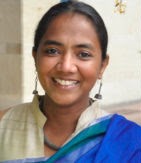 Vandini Mehta is an architect, urban researcher, and co-founder of Studio VanRO and SVR Foundation, both New Delhi based initiatives at the intersection of architecture, urbanism, and art. She recently received a doctorate from the School of Planning and Architecture, New Delhi where she has also been a Visiting faculty and Professor; alongside holding an MS in Architecture from UC Berkeley. Her research interests span post-independence Indian heritage, peripheral contemporary urbanism, and colonial urban history. Vandini also directs a social design practice through initiatives focused on sustainable infrastructure and community driven development. She is the co-author of the monograph, The Structure: Works of Mahendra Raj which has received wide international recognition and culminated in a major retrospective exhibition at the Kiran Nadar Museum of Art (KNMA) (SAGE).
This is the one hundred and ninty seventh (197) in a series of Urban Workshops planned by the Centre de Sciences Humaines (CSH), New Delhi, and Centre for Policy Research (CPR). These workshops seek to provoke public discussion on the city’s development issues and address all its facets including its administration, culture, economy, society, and politics. For further information, please contact: Rama Devi at ramadevi2487@gmail.com, Champaka Rajagopal at champaka@cprindia.org or Partha Mukhopadhyay at partha@cprindia.org.